How to Say 'Friend' in Spanish Slang: 20+ Words From Every Country
Learn 20+ Spanish slang words for friend from Mexico, Colombia, Argentina, and beyond. From compa to parcero, discover what locals actually say.
You just made a new friend in Latin America. Great. Now, what do you actually call them? Because saying "amigo" is like calling your best friend "acquaintance" in English. It technically works, but nobody actually talks like that.
Every Spanish-speaking country has its own slang for "friend," and using the right one instantly tells people you get it. Using the wrong one? Well, you might accidentally call your Colombian buddy something that sounds weird in Mexico, or use a word that only grandpas say. Here's your country-by-country guide to sounding like a local.
 Mexico: Where Everyone's Your Compa
Mexicans have more words for "friend" than most countries have for "hello." The go-to is compa, short for compadre, and you'll hear it everywhere from taco stands to office cubicles. Sounds like "kohm" + "pa" (as in "papa").
Then there's cuate, which literally means "twin" but Mexicans use it to describe a close friend, someone who's basically your other half. Sounds like "kwah" + "teh."
If you want to go deeper into Mexican friendship territory, carnal is your word. It means something like "blood brother," someone so close they're practically family. Sounds like "car" + "nahl." When a Mexican calls you their carnal, that's not casual. That's love.
For the old-school Mexico City crowd, valedor is the pick. It carries a vibe of loyalty and mutual respect that the other words don't quite match. And of course, wey works as "friend" too, though it's more like "dude." If you want to know more about that one, check out our deep dive on what wey actually means.
Mano, short for "hermano" (brother), rounds out the Mexican toolkit. You'll hear "¿Qué onda, mano?" constantly. Sounds like "ma" (as in "mama") + "no."
 Colombia: Parcero or Nothing
Colombia runs on parcero, often shortened to parce. This is THE Colombian word for friend, and using it correctly will earn you instant respect in Medellín, Bogotá, or anywhere in between. Sounds like "par" + "seh" + "ro" (as in "row"). The short version, parce, sounds like "par" + "seh."
The word comes from a Basque term meaning "equal" or "partner," which tells you everything about what Colombian friendships are about. When someone calls you parcero, they're saying you're on their level.
Llave is another Colombian gem. Yes, it literally means "key," but calling someone "mi llave" means they're your key person, your ride-or-die. Sounds like "yah" + "veh." If a Colombian calls you their llave, you've made it into the inner circle. Want more Colombian expressions? Check out our guide on how to say 'cool' in Spanish, where Colombian chévere and bacano take center stage.
 Argentina: Che, Boludo, and Trust Issues
Che is Argentina's signature word. It's not exactly "friend" per se, it's more like "hey, you" but used exclusively between people who are comfortable with each other. Sounds exactly like it looks: "cheh." Yes, it's where Che Guevara got his nickname.
Boludo is the real test. Between friends, calling someone boludo is pure affection. With a stranger? You just called them an idiot. The tone is everything. Sounds like "bo" + "loo" + "do" (as in "doctor"). If an Argentine is throwing boludos at you while smiling, congratulations, you're in.
For something less risky, viejo (literally "old man") works perfectly as a friendly term. "¿Cómo andás, viejo?" is the Argentine equivalent of "What's up, man?" Sounds like "vyeh" + "ho."
 Venezuela: Pana and Chamo Country
Pana is Venezuela's word for a close friend. It's warm, loyal, and uniquely Venezuelan. Sounds like "pa" (as in "papa") + "na" (as in "nacho"). Calling someone "mi pana" is saying they're your person, the one you trust.
Chamo is even more quintessentially Venezuelan. It's basically "dude" or "buddy" but with a distinctly Venezuelan flavor that you won't hear anywhere else. Sounds like "cha" (as in "cha-cha") + "mo" (as in "mocha"). Every Venezuelan conversation has at least three chamos in it.
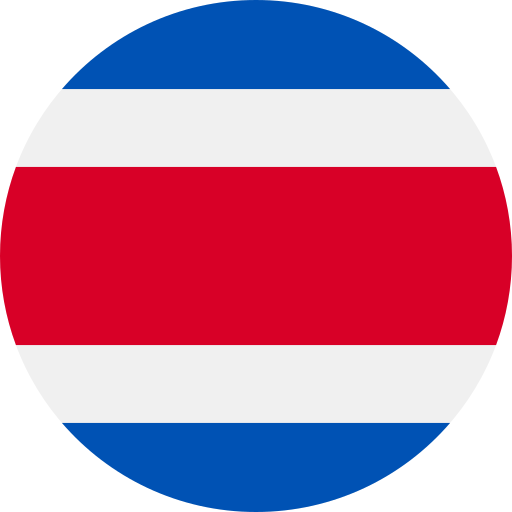 Costa Rica: Mae All Day
Mae is Costa Rica's everything word. Friend, dude, bro, that random person you're telling a story about. Ticos use mae the way Mexicans use wey, which is to say, constantly. Sounds like "my" with a soft ending. A typical conversation between Costa Ricans might contain more maes than actual content words.
 Peru: Causa, the Friendship Word
Causa is Peru's slang for close friend. Yes, it's also the name of a famous Peruvian potato dish, which somehow makes it even more Peruvian. Sounds like "cow" + "sa" (as in "salsa"). When someone calls you "causa" in Lima, they're not talking about food, they're saying you're their people.
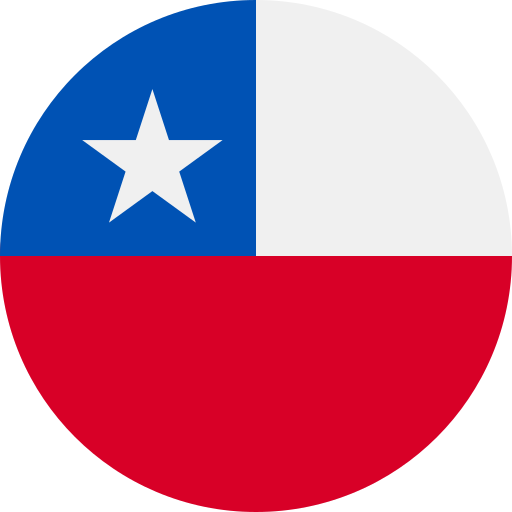 Chile: The Land of Compadre
Compadre is the full, un-shortened version that Chile made its own. While most countries shortened it to compa, Chileans kept the whole word and made it the default way to address a friend. Sounds like "kohm" + "pa" (as in "papa") + "dreh." Chileans also throw in colega (colleague) casually among friends, even when there's zero professional relationship involved.
 The Rest of the Crew
Bróder pops up across the Caribbean and Central America, a Spanishified version of "brother" that sounds exactly how you'd expect: "bro" + "der." The Dominican Republic, Honduras, and Ecuador all claim it.
Manito (little brother) is the sweeter, smaller version of mano, popular in Mexico and parts of Central America. Sounds like "ma" (as in "mama") + "nee" + "toh."
And yunta, which literally means a pair of oxen yoked together, is used in Chile and parts of South America for that friend who's always by your side. Sounds like "yoon" + "ta" (as in "taco"). It's beautifully poetic when you think about it: two animals pulling in the same direction.
The Universal Ones
Some words cross borders. Compa works from Mexico to Colombia. Bróder is understood anywhere. And vato, while primarily Mexican and Chicano, has spread through music and movies to become recognizable across Latin America. If you're not sure which country-specific word to use, compa is your safest bet.
If you liked learning about how to say friend, you might also enjoy our guide on how to say "cool" in every country or how to say "dude" across the Spanish-speaking world.
Quick Reference
| Country | Word | Meaning |
|---|---|---|
| Mexico | Compa, Cuate, Carnal, Wey | Buddy, twin-friend, blood brother, dude |
| Colombia | Parcero/Parce, Llave | Equal/partner, key person |
| Argentina | Che, Boludo, Viejo | Hey you, buddy/idiot, old man |
| Venezuela | Pana, Chamo | Close friend, buddy |
| Costa Rica | Mae | Dude/friend |
| Peru | Causa | Close friend |
| Chile | Compadre, Yunta | Buddy, ride-or-die |
| Caribbean/Central Am. | Bróder, Manito | Brother, little bro |
Now go call your friends by the right name. And if you want to discover even more Spanish slang, explore the full Hablaaa dictionary and find words your textbook never taught you.